Can't Change the Room? Run the 30-Day Experiment Properly
One desk, one wall, no possibility of moving. A 30-day protocol for testing whether an ambient setup actually changes anything for you — including the failure modes that make most people quit on day three.
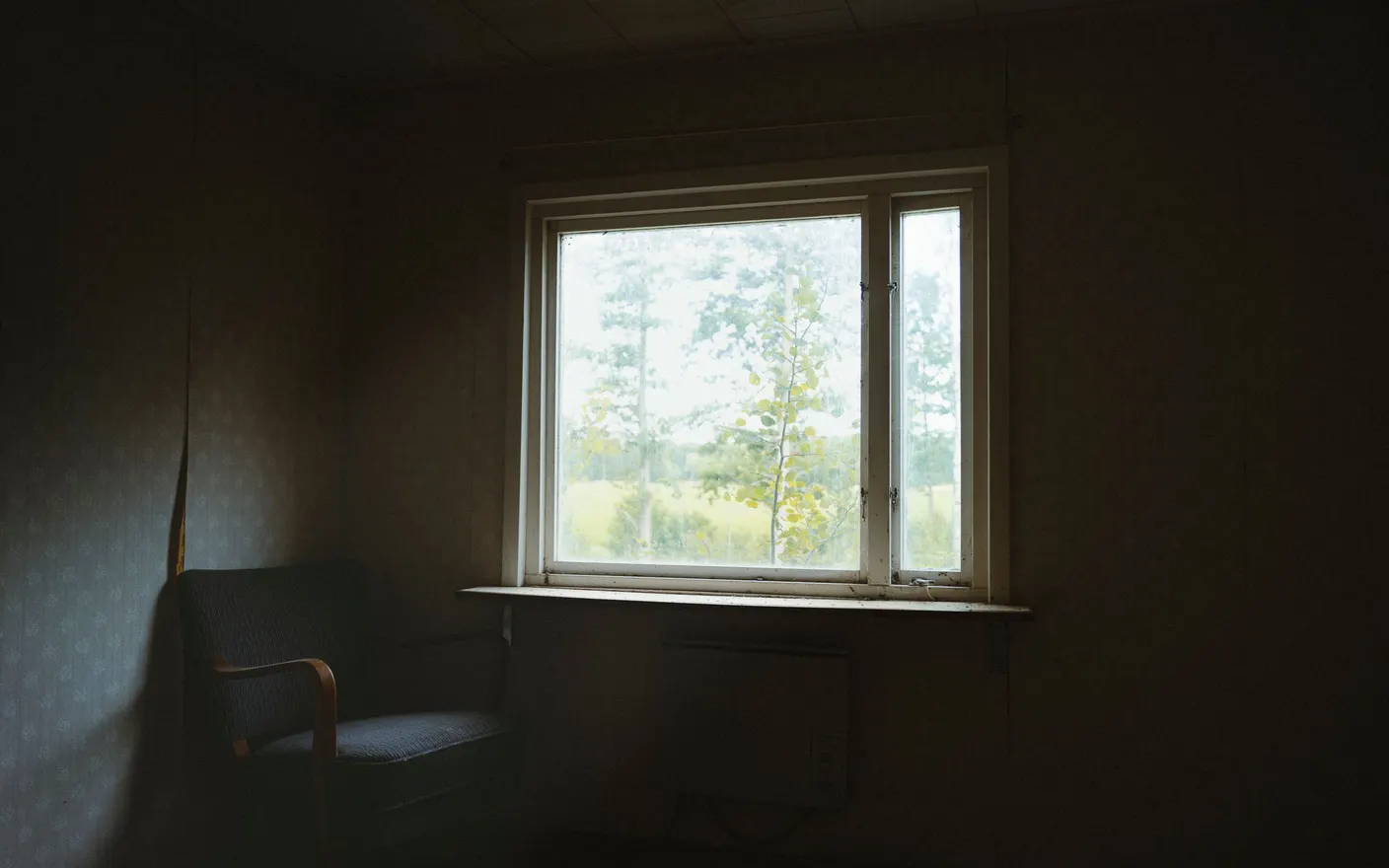
If you can't move, can't remodel, and can't buy your way out of the room, the one surface left is the screen. Whether changing it does anything for you is an open question, and the honest way to answer it is to run a month on yourself rather than trust anyone's testimonial — ours included.
Most people don't get an answer, because they change five things in the same week and then judge the result on day three. Here's how to run it so the month is worth something.
The short version: log a normal week before you change anything. Then change exactly one thing — what's on the screen — and leave everything else alone. One scene per week, four weeks. One sentence in a notebook at the end of each day. Read the whole thing at day 30, not day 3. The most common way this goes wrong is switching scenes for novelty, which measures novelty.
1. Spend the first week measuring nothing but your normal life
A baseline is the part everyone skips and the only part that makes the rest interpretable. Run one ordinary week with your current setup and record whatever measure you've picked — tracked hours, words, commits, closed tickets. Without it, week two is being compared to a memory, and memory grades the thing you just paid for generously.
2. Change one thing, and let it be the screen
The reason to isolate the screen isn't that it matters most; it's that it's the one variable you can change and undo in ten seconds, without spending money or moving furniture. If you also buy a lamp, reorganise the desk, and start a new sleep schedule, you will finish the month with a feeling and no idea what caused it. Save the lamp for the next month.
3. One scene per week — switching daily only measures novelty
Almost anything new feels good for two or three days. That's the effect you're trying to see past, not the effect you're trying to find. Give each scene a full week so you get to the part where you've stopped noticing it, which is where the honest answer lives: once you've stopped noticing, is the room still easier to sit in, or has it gone back to being the room it was?
4. Write one sentence a day, not a rating
A 1–10 score at the end of a workday is mostly a record of how the last hour went. A single sentence — what the day was like, what got in the way — is harder to fake and much more readable a month later. The useful ones tend to be specific and slightly annoyed. Keep it to one sentence so you actually do it on day 19.
5. Pick the measure before you start, not after
Choose one number you already collect and commit to it in advance. Deciding at the end which metric to report is how a month of noise turns into a result: with enough candidate measures, one of them will always be up. One number, chosen on day zero, plus the sentences. That's the whole instrument.
6. Read it at day 30 — and expect a small answer
Environment changes are not step changes. If a month of this gives you a modest improvement and a room that's less unpleasant to be in, that's the realistic upper end, and it's still worth having if it costs almost nothing. If the sentences say the room got easier but the number didn't move, that's a legitimate outcome too — write it down as that, rather than talking yourself into a number that isn't there.

Tayu — a healthy rhythm for desk work
Four ways this goes wrong
- A bright night scene at 11pm. A city skyline picked on looks is a large, bright, blue-heavy light source sitting in front of you in the evening. If you work late, this is the one failure mode with a real mechanism behind it — window access and light exposure track measurably with sleep, which is exactly the axis you'd be pushing the wrong way. Save the bright ones for the morning.
- Ambience with people talking in it, during writing. Café recordings are lovely and they fight directly with reading and writing. Researchers who study this measure how understandable the speech is rather than how loud, and that's what tracks the damage — half-audible conversation is worse than louder sound with no words in it. Keep the café for the inbox.
- Judging on day one. Day one is novelty, in both directions: some people find a moving wallpaper unbearable for an afternoon and fine by Thursday. Neither reaction on day one predicts week three.
- Changing three things at once. The classic version is a new app, a new desk layout, and a new schedule in the same week, followed by a month of not knowing. One variable. It's slower and it's the only version that answers anything.
What to do with the answer
A month on yourself isn't evidence in the scientific sense — it's one person, no control, and you knew which condition you were in the whole time. What it is good for is a decision: whether this is worth keeping, worth switching, or worth abandoning before you spend money on the next thing. That's a lower bar than proof, and it's the bar that actually applies here.
Tayu is the ambient wallpaper app we make for Mac, and it's a reasonable thing to run this on — scenes with matching ambient sound, and scheduling so the room marks morning and evening on its own. Several other apps in the category would serve the experiment just as well. The protocol is the part worth keeping.
FAQ
Have you run this experiment yourselves and published the numbers?
No, and you should be suspicious of anyone in our position who has. We make an ambient wallpaper app; a study we ran on our own product would tell you almost nothing. What we can offer is a protocol designed so it doesn't fool you, and links to the published research where any exists.
Why 30 days and not a week?
Because a week mostly measures novelty. Almost any change to a room feels good for a few days. A month is roughly the shortest window where you can tell the difference between "this is new" and "this is better", and it gives you enough days that one bad Tuesday does not decide the result.
What should I actually measure?
Something you already collect, so the measuring itself does not change your behaviour — hours in a time tracker, commits, words written, tickets closed. Pick one before you start. Picking it afterwards means picking the one that happens to look good.
What if the answer is that nothing changed?
That is a real result and worth having for the cost of a month of doing nothing differently. It also tends to be specific rather than total: people often find the setup does nothing for output but makes the room easier to sit in, or the reverse. Both are useful to know before you spend money on a desk.
Can I just change the scene whenever I feel like it?
Once the experiment is over, yes — that is the normal way to use one of these apps. During the 30 days it wrecks the result, because you can no longer tell which scene did what, and switching for novelty is itself the thing you are trying to measure.
A calmer live wallpaper for Mac
Tayu pairs 4K nature scenes with ambient sound, YouTube wallpapers, playlists, schedules, and AI scene switching for focused work and small breaks.